Why Choose an Electric New Car for Global Buyers?

Time:2026-10-16 Author:Sophia
0%

For global buyers, choosing an Electric New Car is more than following a popular automotive trend. It is a practical decision shaped by energy prices, charging access, driving distance, and local weather. In many cities, home charging can turn overnight parking into a simple refueling routine. A quiet motor, instant acceleration, and fewer engine components may also reduce daily maintenance demands.

Fatih Birol, Executive Director of the International Energy Agency, has stated, “Electric cars are the key technology to decarbonise road transport in the next decades.” His view reflects the vehicle’s wider importance. An Electric New Car can help reduce tailpipe emissions, especially when electricity comes from cleaner sources. However, its environmental benefits depend on battery production, electricity generation, vehicle size, and recycling systems. The answer is not automatically perfect.

Global buyers should examine real ownership conditions before choosing a model. Check charging standards, public-network reliability, battery warranties, software support, and local repair expertise. A compact car may suit crowded European streets, while a larger battery could matter in remote regions with fewer chargers. Cold temperatures can reduce driving range. High heat can create different battery-management concerns. These details are easy to overlook.

There is also a personal learning curve. Some buyers may expect instant convenience and discover that charging requires planning. Others may underestimate insurance, import costs, or limited service coverage. The strongest choice balances technology with honest local research. This introduction explores why an Electric New Car appeals worldwide, while recognizing where its promises still need testing.
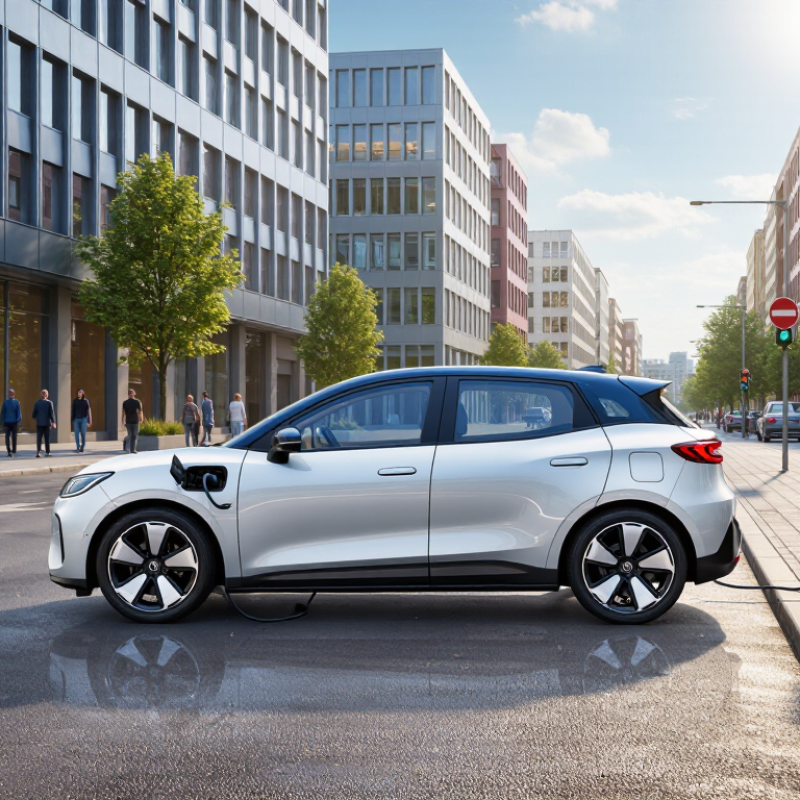
Why Choose an Electric New Car for Global Buyers?

Definition and Core Features of an Electric New Car

An electric new car is a newly manufactured vehicle powered mainly by electricity. Its battery sends energy to one or more electric motors. Unlike a conventional car, it produces no tailpipe emissions during driving. The main systems include a rechargeable battery pack, power electronics, an onboard charger, and regenerative braking. Regenerative braking recovers some energy when the vehicle slows. That energy returns to the battery.

The battery is the vehicle’s central component. Its capacity affects driving range, charging time, weight, and cost. A thermal management system helps control battery temperature during hot or cold conditions. Software also monitors energy use, charging status, and safety limits. A clear dashboard should show remaining range and estimated charging time. Charging is different. Home charging may suit daily travel, while public charging supports longer journeys. Buyers should check plug compatibility, local voltage, and charging-network coverage before purchase.

Real-world range often differs from laboratory figures. Cold weather, high speeds, heavy loads, and cabin heating can reduce distance. Range can shrink. Battery aging also deserves attention, although modern protection systems can slow capacity loss. Service access, warranty terms, crash testing, and battery recycling policies provide useful evidence of reliability. Some electric cars feel smooth and quiet, but their added weight may affect handling and tire wear. I would not treat impressive software as proof of quality. A careful road test and independent technical information remain necessary.

Why Choose an Electric New Car for Global Buyers?

Definition: An electric new car is a newly manufactured vehicle powered fully or partly by electricity, using a battery and an electric motor. Core features include zero tailpipe emissions for battery-electric models, energy-efficient operation, regenerative braking, and access to home or public charging.

Global electric car sales increased from approximately 3.0 million in 2020 to nearly 14 million in 2023, showing growing consumer interest in efficient, lower-emission mobility. Figures include battery-electric and plug-in hybrid passenger cars and are rounded from international energy market data.

How Electric New Cars Differ from Gasoline Vehicles

Why Choose an Electric New Car for Global Buyers?

How Electric New Cars Differ from Gasoline Vehicles

Electric new cars convert energy more efficiently than gasoline vehicles. The U.S. Department of Energy estimates that electric drivetrains deliver over 77% of stored energy to the wheels. Conventional gasoline vehicles typically deliver only 12% to 30%. This difference appears during daily driving. Regenerative braking can recover energy in traffic, while a gasoline engine loses much of it as heat. Quiet acceleration is another noticeable change.

Charging also changes the ownership routine. A home charger can refill a vehicle overnight, but apartment residents may depend on public stations. The International Energy Agency reported more than 17 million electric cars were sold worldwide in 2024. That growth is expanding charging networks, though access remains uneven between cities and regions. Road trips still require planning. Cold weather can reduce driving range, and fast charging may take longer than expected.

Operating costs can be lower because electric motors need fewer moving parts. There is no engine oil or exhaust system to maintain. However, battery replacement costs and electricity prices deserve careful attention. The ICCT has found that electric cars generally produce substantially fewer lifetime greenhouse gas emissions than gasoline cars, even after battery manufacturing. The result is not perfect. Electricity sources, driving habits, and battery size all matter. A large electric vehicle used inefficiently can weaken its environmental advantage. Global buyers should compare real charging access, climate conditions, and annual mileage—not only the advertised range.

Key Benefits for Buyers in Different Countries

Why Choose an Electric New Car for Global Buyers?

An electric new car can meet different needs across countries. In cities, quiet driving and zero tailpipe emissions improve daily travel. Home charging may cost less than repeated fuel purchases, depending on local electricity prices. In Norway, cold weather can reduce driving range, especially during winter mornings. In hotter regions, air conditioning can also consume noticeable energy. Buyers should compare real-world range, not only laboratory figures.

Charging access matters more than impressive specifications. A buyer in an apartment may depend on public chargers near work or supermarkets. Rural drivers need stronger route planning and reliable fast-charging coverage. Local repair training, battery warranties, and spare-part availability also affect ownership confidence. Check government rules, taxes, import costs, and available incentives before paying a deposit. These details vary widely.

My own early assumption was simple: lower running costs always mean an easier purchase. That was incomplete. A charger installation may require approval, electrical upgrades, or extra fees. Battery performance can change with age and climate. Buyers should request clear service terms and inspect safety certifications from trusted authorities. A careful test drive helps reveal seat comfort, charging habits, visibility, and software usability. Small inconveniences become important after several years.

Charging, Battery Range, and Ownership Requirements

Electric cars suit global buyers who can plan charging around daily routines. The International Energy Agency reported over 14 million electric cars sold worldwide in 2023. They represented about 18% of new-car sales. That growth does not remove practical questions. A vehicle showing 450 kilometres may deliver less on highways, in winter, or with heavy luggage. Real life is messier.

Charging access matters more than headline range. The IEA reported that public charging points grew by more than 40% in 2023. Still, availability differs sharply between cities, countries, and apartment districts. Home charging usually offers the simplest routine, but buyers may need electrical upgrades, parking permission, and a suitable local tariff.

Battery health also deserves attention. An independent 2024 analysis of more than 10,000 electric vehicles found average battery degradation near 1.8% annually. That figure is useful, not universal. Driving speed, climate, charging habits, and long storage can change the result.

Tips: Map your weekly kilometres before choosing a battery size. Check nearby public chargers at busy hours, not only on a quiet Sunday. Ask about battery-health records, software support, roadside assistance, and local repair capacity. Keep a small winter-range buffer. It feels inconvenient, but it prevents stressful trips. Also, compare total ownership costs, including installation, insurance, electricity, tyres, and possible grid fees. Many calculations look precise. They are not.

Costs, Policies, and Practical Buying Considerations

For global buyers, an electric new car should be judged by total ownership cost, not its showroom price. Purchase taxes, import duties, registration fees, insurance, and home-charging installation can change the calculation. A cheaper vehicle may cost more when replacement parts travel across borders. Check the battery warranty, service coverage, and roadside assistance in writing. Do not rely only on sales estimates.

Government policies also require careful verification. Incentives may depend on vehicle price, battery size, residency, or local assembly. Rules can change during a purchasing year. Confirm current information through official transport or tax authorities before paying a deposit. Some markets restrict charging equipment certification or require approved electrical installation. A local electrician should inspect the circuit, especially in older homes.

Daily use matters more than impressive range figures. Measure the distance from your parking space to a power outlet. In cold weather, range can fall, and cabin heating may increase energy use. Public charging prices also vary by location and time. Compare those rates with household electricity costs. Check plug compatibility, charging speed, boot space, ground clearance, and software language support. A short test drive is useful, but insufficient. Review independent safety data and repair access. I would leave a budget margin for unexpected tires, insurance changes, and charging upgrades. Buyers often underestimate these details. That mistake is understandable, but avoidable.

Why Choose an Electric New Car for Global Buyers? - Costs, Policies, and Practical Buying Considerations

Global comparison of major ownership, policy, and purchase considerations. Figures are indicative and may change by location, vehicle specification, tax status, and eligibility.
Decision Area Typical Data Point Why It Matters to Buyers Practical Buying Check
Purchase Incentives The United States has offered a federal clean-vehicle tax credit of up to US$7,500 for qualifying new vehicles, subject to income, battery-content, final-assembly, and vehicle-price requirements. A tax credit can reduce the effective purchase price, but eligibility is not automatic and may depend on the buyer's tax position. Confirm the latest rules, qualifying vehicle list, income limits, and whether the benefit is available at purchase or through a tax filing.
China Purchase Tax Policy China's new-energy vehicle purchase-tax exemption has been extended through 2027; the 2024–2025 exemption is capped at RMB 30,000 per vehicle, with a reduced exemption scheduled for 2026–2027. Tax treatment can materially lower the upfront cost of an eligible electric vehicle. Check eligibility, price limits, tax-invoice treatment, registration requirements, and the policy in the purchase year.
Home Charging Cost At an electricity price of €0.25 per kWh and energy use of 18 kWh per 100 km, charging energy costs about €4.50 per 100 km before charging losses and taxes. Home charging is often less expensive than petrol or diesel on an equivalent-distance basis, especially with off-peak electricity. Use the local household electricity tariff, add approximately 10–15% for charging losses, and compare with public-charging prices.
Public Charging Cost Public charging prices commonly range from roughly €0.30 to €0.70 per kWh, with rapid charging generally costing more than slower AC charging. Frequent reliance on rapid public charging can reduce or eliminate the operating-cost advantage of an electric vehicle. Review connection fees, time-based charges, subscription requirements, idle fees, payment methods, and roaming compatibility.
Charging Time A typical home AC charger may add approximately 25–50 km of range per hour, while a compatible rapid charger can add substantially more in around 20–40 minutes under favorable conditions. Charging speed affects daily convenience and long-distance travel time. Check the vehicle's maximum AC and DC charging rates, charging-curve performance, connector standard, and local electrical capacity.
Maintenance Electric vehicles generally require no engine-oil changes and have fewer engine-related components; tires, brakes, coolant, cabin filters, and suspension still require service. Routine maintenance may be simpler, although parts, labor, insurance, and battery-related repairs vary by market. Request the service schedule, battery warranty, roadside-assistance terms, repair-network coverage, and replacement-part lead times.
Driving Range Many current electric cars provide approximately 300–500 km of rated range, while cold weather, high speeds, heavy loads, and heating or air conditioning can reduce real-world range. Range suitability depends more on climate, driving pattern, and charging access than on the headline laboratory figure. Compare independent real-world tests and plan for a reserve of at least 10–20% on unfamiliar routes.
Battery Warranty New electric vehicles commonly include battery coverage of around 8 years or 160,000 km, although duration, mileage, capacity threshold, and regional terms differ. Battery coverage is one of the most important factors affecting long-term ownership risk and resale value. Read the exact degradation threshold, exclusions, transferability, diagnostic process, and geographic validity of the warranty.
Import and Registration Imported vehicles may be subject to customs duty, value-added tax, homologation, local safety certification, registration fees, and language-specific documentation. A lower overseas purchase price may disappear after shipping, taxes, compliance work, and registration costs. Calculate the complete delivered cost and verify charging compatibility, warranty recognition, software access, and service support before payment.
Total Cost of Ownership A five-year comparison should include purchase price, financing, taxes, insurance, charging, maintenance, tires, depreciation, and resale value. The lowest upfront price is not necessarily the lowest-cost choice over the ownership period. Model at least three scenarios: home charging, mixed home/public charging, and public charging only.

Reference note: Policy and pricing examples reflect publicly reported rules and market conditions for approximately 2024–2025. Buyers should verify current information with the relevant tax authority, transport authority, utility provider, insurer, and authorized service organization before purchasing.

FAQS

What is an electric new car?

It is a newly manufactured vehicle powered mainly by electricity. A battery sends energy to one or more electric motors. During driving, it produces no tailpipe emissions.

Which systems are central to its operation?

Key systems include the battery pack, power electronics, onboard charger, and regenerative braking. Regenerative braking recovers some energy during slowing. Some energy returns to the battery.

How does battery capacity affect ownership?

Battery capacity influences driving range, charging time, vehicle weight, and purchase cost. A larger battery may provide more range. It can also add weight.

Where can an electric car be charged?

Home charging may fit daily travel and overnight parking. Public chargers support longer journeys. Apartment residents may need more planning.

What should buyers check before charging?

Check plug compatibility, local voltage, and nearby charging coverage. A suitable socket matters. A convenient charger can change daily routines.

Why can real-world range differ from advertised figures?

Cold weather, high speeds, heavy loads, and cabin heating can reduce range. Battery aging may also reduce capacity. Range can shrink.

Are electric cars cheaper to maintain?

They usually need fewer mechanical services because electric motors have fewer moving parts. There is no engine oil or exhaust system. However, battery repairs and electricity prices still require attention.

Are electric cars always better for the environment?

They generally produce fewer lifetime greenhouse gas emissions than gasoline vehicles. The result depends on electricity sources, battery size, and driving habits. It is not perfect.

Does quiet acceleration prove high quality?

No. Quiet, smooth acceleration is noticeable, but it proves little by itself. Added weight may affect handling and tire wear. I would still request a careful road test.

What evidence should buyers examine?

Review warranty terms, crash-test results, service access, and battery recycling policies. Check charging time in local conditions. Impressive software is not enough.

Conclusion

An Electric New Car is a newly manufactured vehicle powered mainly by electricity stored in a rechargeable battery, with an electric motor replacing the traditional gasoline engine. Compared with gasoline vehicles, it produces no tailpipe emissions, operates more quietly, and can deliver smooth acceleration with fewer moving parts. For buyers in different countries, its main advantages may include lower energy and maintenance costs, improved urban air quality, and access to cleaner transportation options. However, the overall experience depends on local electricity prices, climate, road conditions, and charging availability.

Before purchasing, global buyers should consider battery range, charging speed, home charging requirements, and access to public charging stations. Battery performance can vary with temperature, driving habits, vehicle load, and terrain. Buyers should also compare purchase prices, financing, insurance, servicing, battery warranties, and resale expectations. Government incentives, import duties, registration rules, and local environmental policies may significantly affect affordability. Careful research into total ownership costs and daily driving needs can help buyers decide whether an Electric New Car is a practical and sustainable choice.


Sophia

Sophia

Sophia is a dedicated marketing professional with an exceptional depth of knowledge about her company's products and services. With a keen understanding of market trends and customer needs, she crafts insightful blog posts that not only inform but also engage readers, enriching the company’s online......