Choosing an Electric Tricycle is not just about comparing prices or motor ratings. A buyer must match the vehicle to real work: carrying market goods, serving passengers, or covering uneven rural roads. The wrong choice can show up quickly—a steep ramp, a full cargo box, or a battery that fades before the final delivery. Small details matter.
Electric mobility consultant Daniel Reed offers this practical reminder: “Buy for the route you have, not the route you hope to have.” Use that idea to guide the ten checks ahead. Review payload capacity, battery range, charging time, braking performance, tire type, frame strength, weather protection, service access, warranty terms, and supplier support. Ask for specifications in writing. Then compare them with your daily operating conditions, not just a brochure photograph.
Look closely. A claimed range may change with rider weight, hills, temperature, and cargo. A sturdy frame can still feel awkward if the turning space is tight. And a low purchase price may not include replacement parts or local maintenance. These judgments are not always neat; sometimes a short supervised test ride reveals more than another spreadsheet. Verify the details, and leave room for a second opinion.
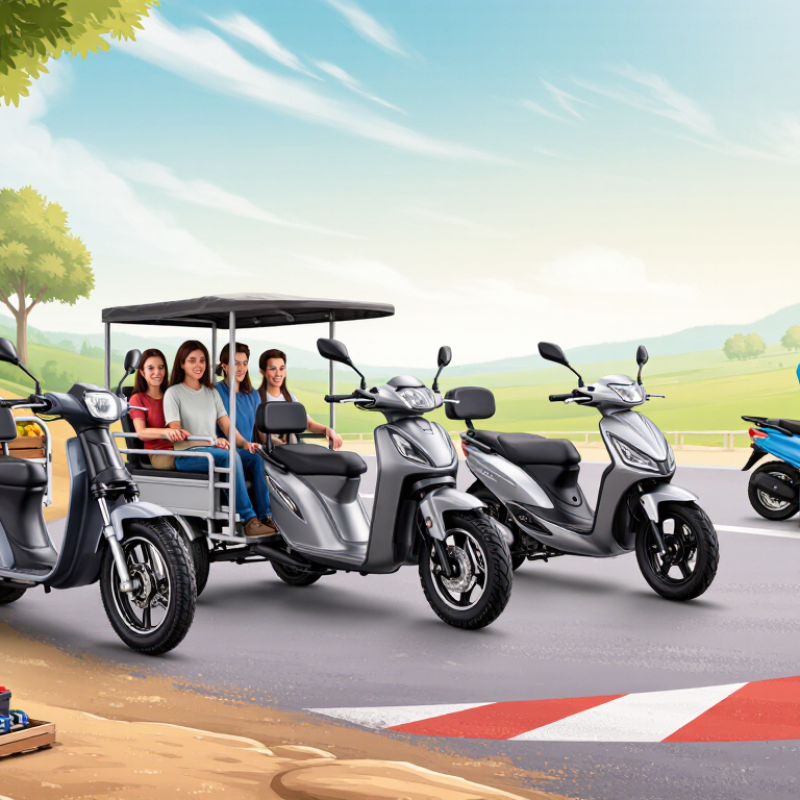
Start with the route, not the motor rating. Draw the daily loop and mark steep ramps, rough paving, tight turns, and places where the tricycle must stop. A short route with repeated hills can demand more power than a longer, flat one. Measure the narrowest gate and the sharpest turn. These details decide whether a loaded vehicle can actually work.
Cargo needs change the calculation. Weigh a typical load, then record its size and how often it shifts during transit. The IEA’s Global EV Outlook 2024 reports that global electric two- and three-wheeler sales exceeded 10 million in 2023, showing how widely these vehicles are being adopted. But market growth cannot tell you whether a particular battery will cover your own route. Compare the maker’s range claim with a full working day, including stops, hills, headwinds, and battery aging. Test it loaded.
Daily conditions matter too. Note hours parked outdoors, charging access, rain exposure, and the time available between shifts. A bulky cargo box may catch crosswinds; a heavy load can also lengthen braking distance. Rain changes everything. Leave room for a less-than-perfect day: cold weather, a detour, or an extra delivery can cut into usable range. Record actual energy use during a trial week before setting a purchase target. One week is useful, but it may not capture seasonal extremes.
Treat the advertised range as a starting point, not a daily promise. Ask whether it was measured with a light rider, flat pavement, and steady speed. Cargo, hills, cold weather, and frequent stops can reduce distance between charges. Real routes differ. Compare usable battery capacity in watt-hours, not just voltage or a large-looking range claim.
Check charging time from near empty to full, and ask what charger was used. A small charger may take overnight; a faster one can reduce waiting, but only if the battery supports it. Confirm whether it can be charged on or off the tricycle. That detail matters in a shared garage or upstairs flat. Measure the outlet distance. Also ask about temperature limits, charge indicators, and whether partial charging is acceptable.
Replacement options deserve equal attention. Request the battery’s chemistry, voltage, connector type, dimensions, and compatible replacement part number in writing. Ask how long replacements are expected to remain available, what the warranty excludes, and whether local technicians can install one. A low purchase price may look less attractive if the battery must be shipped far away or the whole vehicle becomes unusable. I would verify these details before paying; paperwork is less exciting than a test ride, but easier to check.
| # | Buying Tip | What to Compare | Practical Check Before Ordering |
|---|---|---|---|
| 1 | Estimate real-world range | Many electric tricycles are advertised with ranges around 30–80 km per charge. Actual distance varies with load, terrain, speed, temperature, tire pressure, and battery age. | Ask for test conditions and a range estimate at your expected payload and route. Keep a margin above your usual daily distance. |
| 2 | Compare usable battery capacity | Check both voltage and amp-hours; watt-hours provide a useful capacity comparison. For example, a 48 V, 20 Ah pack is nominally about 960 Wh (48 × 20). | Confirm whether the quoted capacity is nominal or usable, and whether the battery is included in the vehicle price. |
| 3 | Choose a suitable battery chemistry | Lead-acid batteries often cost less upfront but are heavier. Lithium-ion packs are generally lighter and may support more charge cycles, with higher initial cost. | Compare total ownership cost, weight, expected use, and the supplier’s documented cycle-life conditions—not just the purchase price. |
| 4 | Check charging time and charger rating | Charging commonly takes several hours; roughly 4–8 hours is a useful planning range for many configurations, but capacity, charger current, and battery condition affect the result. | Request the charger’s input voltage, output voltage, current, and estimated full-charge time. Confirm that it matches your local electrical supply. |
| 5 | Plan for battery replacement | Replacement availability can matter as much as the original battery specification. Packs may differ in dimensions, voltage, connector, mounting, and battery-management requirements. | Before purchase, obtain the replacement pack specification, compatible charger details, and a written process for ordering a matching battery. |
| 6 | Verify payload and range together | Higher payloads generally increase energy use and can reduce range. Passenger, cargo, and utility models may have different load limits. | Check the rated payload and gross vehicle weight. Ask for range guidance at the load you expect to carry, not only an unloaded estimate. |
| 7 | Match voltage and connectors | A replacement battery must be electrically and mechanically compatible. Similar-looking packs can have different voltage, polarity, connectors, or communication systems. | Request a battery specification sheet and clear photos or drawings of the connector and mounting points. Do not rely on appearance alone. |
| 8 | Check battery protection and storage guidance | Lithium battery packs commonly use a battery management system (BMS) to help manage operating limits. Storage temperature and state of charge can affect battery life. | Ask what protections are built in and follow the supplied charging, storage, and inspection instructions. Avoid charging a damaged battery. |
| 9 | Confirm local charging and transport requirements | Electrical standards and rules for shipping batteries vary by destination and transport method. Documentation requirements may differ for road, sea, and air freight. | Confirm local plug and voltage compatibility, and ask the seller and freight provider which battery documents and transport arrangements are required. |
| 10 | Compare warranty and after-sales support | Battery warranty terms may differ from the vehicle warranty and can include limits based on time, usage, or capacity retention. | Get the warranty period, exclusions, claim procedure, and replacement lead time in writing. Check whether technical support and parts are available in your region. |
| Note: Figures are general planning examples, not guaranteed specifications. Confirm the exact battery, range, charging time, warranty, and replacement compatibility for the specific tricycle configuration and destination market. | |||
Motor power is only useful when matched to payload, hills, and daily distance. EN 15194:2017 offers a useful European benchmark: qualifying pedelecs use a maximum 250 W continuous rated power, with assistance ending at 25 km/h. This is not a universal specification. Ask for the motor’s continuous rating, not just its peak figure, and check performance with the tricycle fully loaded. A large peak number can look impressive, yet tell little about sustained hill climbing.
Braking must suit the total loaded weight. ISO 4210-4:2023 describes bicycle brake test methods; ask suppliers for test documentation, not simply a claim of “strong brakes.” Check lever reach, cable or hydraulic feel, and whether the parking brake holds the tricycle on a slope. NHTSA reported 1,105 pedalcyclist deaths in the United States in 2022, in its Traffic Safety Facts report. That figure does not measure component performance, but it is a sobering reminder that controllability matters. Test stopping on a dry surface, then reassess with cargo.
Tires should show a usable pressure range and load rating; rear tires often carry much of a tricycle’s cargo weight. Look for even seating on the rim and inspect sidewalls for bulges. ISO 4210-6:2023 sets frame and fork test methods, so request relevant test records. Also inspect welds, axle joints, and the cargo-bed mounts. A polished finish can hide details. I would not judge frame strength by appearance alone.
Before comparing prices, inspect the tricycle’s brakes, lights, tires, frame, and stability. Ask for its rated load and compare that figure with passengers, cargo, and accessories. During a supervised test ride, try turning slowly and braking on a clear, level surface. Notice any wobble or unusually long stopping distance. Small details matter.
Rules differ by country and sometimes by city. Confirm how local authorities classify the vehicle, where it may be used, and which speed, lighting, helmet, or registration requirements apply. Import documents and battery transport requirements may also affect delivery. Get current guidance from the relevant local authority, not only a seller’s estimate. A brochure can make this look simple. It rarely is.
Service matters after delivery. Ask whether trained technicians, compatible chargers, and replacement parts are available near your operating area. Check likely wear items, such as brake pads, tires, and cables, along with battery support and warranty coverage. For remote buyers, request realistic repair times and written details about cross-border service. A low purchase price feels less attractive when a basic part takes weeks to arrive. I would also ask what happens when the first fault is hard to diagnose.
An electric tricycle’s purchase price is only the opening figure. Compare the same payload, battery capacity, and included accessories across supplier quotes. Add freight, insurance, import charges, assembly, and expected maintenance. Small costs add up. A spare tire, brake pads, and a replacement battery can change the economics over several years. Ask how long common parts take to arrive, especially if the vehicle earns revenue and downtime costs money. A spreadsheet still misses things.
Read warranty terms line by line. Check coverage periods for the frame, motor, controller, and battery; they may differ. Ask what counts as normal wear, who pays shipping for a faulty component, and what evidence a claim requires. Get answers in writing. Supplier reliability matters just as much: request recent customer references, clear production timelines, and photos or inspection records for the actual configuration. Notice how quickly questions receive specific answers. Vague promises are a warning sign. Even careful estimates can be wrong, so leave room in the budget for delays, repairs, and changing local service needs.
Map your daily route, including steep ramps, rough pavement, tight turns, and frequent stops. Measure narrow gates and turning spaces. Test it loaded.
Weigh a typical load and note its size and movement during travel. A shifting box can affect balance, while heavy cargo increases stopping distance.
Treat it as a starting estimate, not a daily guarantee. Hills, cold weather, headwinds, stops, and battery age can reduce usable distance. Leave a margin.
Check usable capacity, charging time, temperature limits, and whether the battery charges on or off the vehicle. Ask about compatible replacements and warranty exclusions in writing.
Find out how long a near-empty battery takes to charge with the supplied charger. Check outlet distance and available time between shifts. Small details matter.
Compare continuous motor rating with your loaded weight, hills, and daily distance. Peak power alone may not show how well the tricycle climbs over time.
Test stopping with cargo on a dry surface. Check that the parking brake holds on a slope, and inspect tire pressure ranges, load ratings, and sidewalls.
Request relevant frame and fork test records. Inspect welds, axle joints, and cargo-bed mounts. A shiny finish proves little; I might be overly cautious, but appearance is not a strength test.
Choosing an Electric Tricycle for international use starts with understanding the routes it will travel, the cargo it must carry, and the conditions it will face each day. Hills, uneven roads, frequent stops, weather, and operating hours can all affect the right configuration. Compare battery range with your actual daily distance, and consider charging time, battery replacement availability, and how practical it is to recharge at your workplace or home.
Look beyond headline specifications: motor power, braking performance, tire suitability, and frame construction all influence comfort, control, and durability. Check that safety features meet your needs and that suitable servicing and spare parts are accessible where the tricycle will operate. Finally, estimate total ownership costs, including energy, maintenance, and likely replacements. Review warranty coverage and assess the supplier’s responsiveness and reliability so your purchase can support dependable operation over time.

Limaotong