China’s EV Electric Car industry has moved from a niche market into a major force in global automotive manufacturing. Brands such as BYD, NIO, XPeng, Li Auto, Geely, and SAIC now attract attention for different reasons. Some focus on affordable city vehicles, while others develop premium interiors, advanced software, or long-distance comfort.
Choosing the best manufacturer is not as simple as comparing sales figures. A buyer should examine battery chemistry, charging access, warranty terms, safety testing, service coverage, and real-world driving range. BYD benefits from broad production experience and strong battery capabilities. NIO is known for premium design and battery-swapping services in selected markets. XPeng emphasizes driver-assistance technology, while Li Auto has built its identity around extended-range vehicles. These strengths can change as models, prices, and regulations develop.
Independent testing matters. Manufacturer claims may describe ideal conditions, not winter traffic or crowded highways. Software updates can improve a vehicle, but they may also create unfamiliar ownership concerns. I have found that a practical comparison needs more than impressive dashboards and acceleration numbers. It should consider repair support, parts availability, data policies, and resale value. No brand is perfect. Even a highly regarded company may face quality complaints, delivery delays, or uneven overseas support. This guide examines leading Chinese manufacturers through evidence, ownership considerations, and market credibility, helping readers identify which company best matches their driving needs, budget, and expectations.
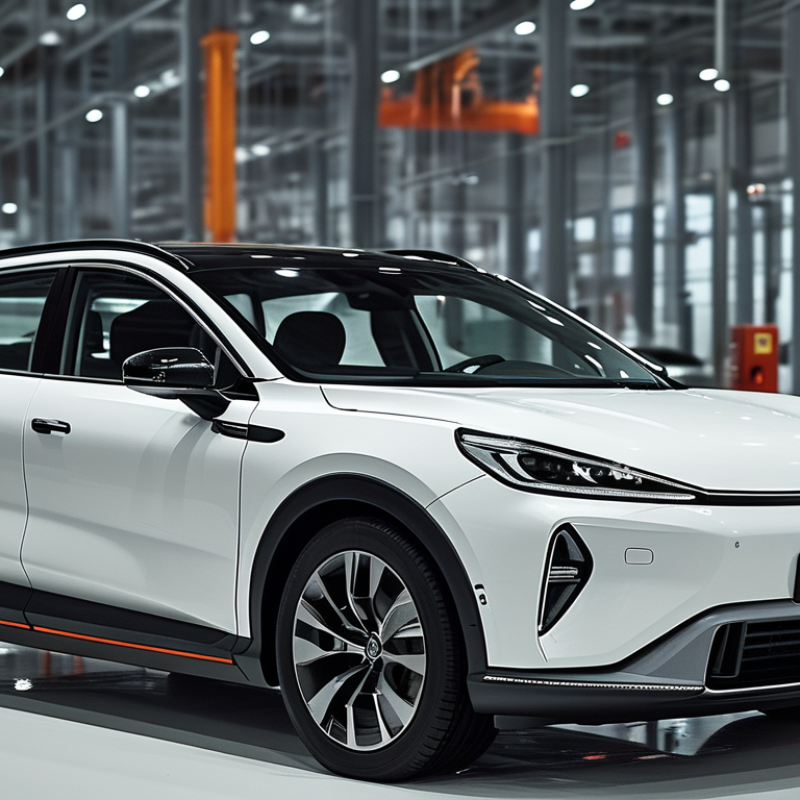
A leading China EV manufacturer is defined by more than stylish design or fast acceleration. It must turn engineering knowledge into dependable daily transport. Battery safety, thermal control, braking performance, and crash protection deserve close attention. Independent testing should support every major safety claim.
Real-world usability also matters. During an evaluation, examine the charging port, cable storage, seat comfort, and dashboard visibility. A vehicle may promise long range, yet winter heating can reduce that figure noticeably. Reliable manufacturers publish clear testing conditions instead of presenting only ideal results. They also provide software updates without hiding important changes in vague language.
Strong production discipline separates serious manufacturers from short-lived competitors. Consistent panel gaps, stable software, traceable battery materials, and careful quality inspections reveal mature operations. Service coverage matters too. Owners need trained technicians, accessible parts, and honest repair estimates. No manufacturer gets every decision right. Some interfaces remain distracting, and certain driver-assistance features can feel overconfident. That weakness should be acknowledged, measured, and corrected through evidence. A leading manufacturer listens to field data, responds to safety concerns, and improves products across their working life.
China’s electric vehicle manufacturers grew through steady investment, intense competition, and strong domestic demand. Public production data shows a clear shift from small pilot projects to highly automated factories. Early companies focused on battery packs, basic electric drivetrains, and limited city models. Later, they improved software, charging systems, thermal management, and manufacturing speed. Some factories now assemble vehicles in minutes, with robots checking welds and cameras inspecting paint under bright lights.
Expansion followed a practical pattern. Manufacturers first built distribution networks in large cities, then moved into smaller regions. They also created partnerships for batteries, semiconductors, transport, and charging infrastructure. Export growth became more selective. Companies studied local safety rules, road conditions, driving habits, and service expectations before entering new markets. This approach reduced some risks, but it did not remove them. A vehicle can perform well in a showroom and still face repair delays abroad.
The strongest manufacturers now compete on total ownership, not only acceleration or range. Buyers notice battery warranties, software updates, cabin comfort, and service response times. Price cuts can attract attention, yet they may weaken long-term profitability. That concern deserves more scrutiny. Fast expansion sometimes hides uneven quality control, inconsistent after-sales support, or pressure on suppliers. China’s EV industry remains technically impressive, but its development is unfinished. Real progress will depend on durable batteries, transparent testing, reliable repairs, and responsible growth across different markets.
The leading Chinese EV manufacturers differ by vehicle type and market, not by one universal ranking. In compact sedans, the strongest companies usually balance low energy use, smooth city driving, and affordable battery options. These cars often suit crowded urban roads, where a tight turning circle matters more than extreme acceleration. For family SUVs, market leaders focus on rear-seat space, quiet cabins, reliable driver assistance, and fast charging during weekend travel.
Large electric SUVs compete through stronger towing ability, longer highway range, and better winter performance. However, claimed range can change sharply with speed, temperature, passengers, and luggage. That detail deserves attention. In premium segments, manufacturers compete with refined interiors, advanced software, and high-speed charging. Yet a polished screen cannot replace dependable service or clear warranty terms.
Commercial vans and light trucks form another important category. Fleet buyers often judge vehicles by daily operating cost, payload, charging downtime, and battery durability. Export markets add different demands, including local safety testing, road conditions, repair networks, and charging standards. A vehicle leading in its home market may perform less convincingly overseas.
I would compare independent registration data, verified safety results, long-term owner reports, and after-sales coverage before choosing a manufacturer. Sales rankings can change quickly. Real-world reliability takes longer to prove. That is where many comparisons remain incomplete.
What Are the Best China EV Electric Car Manufacturers?
Technology now shapes competitiveness more than exterior styling. The International Energy Agency reported that China sold over 11 million electric cars in 2024, nearly two-thirds of global electric-car sales. This scale gives manufacturers faster software testing, denser supplier networks, and lower production costs. Digital dashboards, remote updates, and driver-assistance systems can improve daily use, but software quality still varies between models. That matters.
Battery systems remain the clearest cost lever. BloombergNEF reported that average lithium-ion battery-pack prices fell 20% in 2024, reaching about 115 dollars per kilowatt-hour globally. Chinese pack prices were lower, near 94 dollars per kilowatt-hour. Lower costs can support competitive prices, longer warranties, or larger batteries. Yet energy density is not everything. Thermal control, charging stability, cold-weather performance, and repair access deserve equal attention. A cheap pack is not automatically a durable one.
Manufacturing depth adds another advantage. High-volume plants can standardize cells, motors, inverters, and body structures, reducing waste and delivery delays. The IEA has also identified China as a dominant center for global battery-cell production and electric-vehicle supply chains. However, rapid expansion can create uneven quality control. Prices move quickly. Buyers should examine independent range tests, degradation data, crash ratings, and service coverage rather than trusting impressive specifications alone. Some published figures use ideal laboratory conditions, not crowded roads, winter temperatures, or repeated fast charging. That gap needs more honest reporting.
China’s expanding battery-electric and plug-in hybrid markets have strengthened manufacturing scale, battery demand, supply-chain efficiency, and technology competitiveness. Figures show annual domestic new-energy passenger and commercial vehicle sales by powertrain, in millions of units.
Source: China Association of Automobile Manufacturers (CAAM), annual vehicle sales data, 2019–2024.
Comparing China’s EV manufacturers requires more than checking advertised range or acceleration. Different buyers need different evidence. A city driver may value compact dimensions, quiet operation, and reliable home charging. A family buyer should examine rear-seat space, child-seat anchors, luggage capacity, and crash-test performance. Fleet operators need battery durability, service response, and predictable running costs.
Test the vehicle in conditions that match real life. Drive through traffic, on uneven roads, and during highway travel. Record energy use with heating or air conditioning switched on. Advertised range can change sharply in winter, heavy rain, or at high speeds. Look closer. Review independent safety results, warranty terms, battery coverage, and software-update policies. A clear service network may matter more than an extra fifty kilometres of range.
Technology deserves careful comparison. Check charging speed from twenty to eighty percent, not only the peak figure. Ask whether public chargers are easy to locate and whether repair parts are locally available. Compare insurance, tyres, depreciation, and scheduled maintenance over five years. A clean spreadsheet can still mislead. I would also inspect panel gaps, screen responsiveness, braking feel, and driver-assistance behaviour. These details reveal daily quality. Independent reviews are useful, but they may reflect different roads, climates, and driving habits. Personal priorities should remain visible when the numbers look impressive.
There is no single best Chinese EV manufacturer for every buyer. The most suitable choice depends on vehicle use, battery requirements, charging access, export support, software expectations, warranty coverage, and local after-sales service. The profiles below compare common manufacturer types without displaying company or brand names.
| Manufacturer Profile | Typical Vehicle Focus | Battery and Range Approach | Charging Capability | Technology Strength | Typical Warranty Pattern | Main Advantages | Potential Limitations | Best Buyer Fit |
|---|---|---|---|---|---|---|---|---|
| High-Volume Mainstream Manufacturer | Compact cars, family sedans, small SUVs, and practical electric crossovers. | Lithium iron phosphate batteries are common because of their lower cost, good thermal stability, and long cycle life. Typical real-world driving range is approximately 250–500 km, depending on vehicle size, weather, and driving conditions. | Many models support approximately 6.6–11 kW AC charging and DC fast charging that can commonly replenish the battery from 30% to 80% in about 25–40 minutes. | Strong cost control, efficient manufacturing, connected-car functions, and increasingly capable Level 2 driver-assistance systems. | Common market patterns are approximately 5–8 years or 120,000–160,000 km for the vehicle, with separate battery coverage that may extend to 8 years or 160,000 km. Exact terms vary by market. | Competitive pricing, broad model selection, relatively simple maintenance, and efficient battery packaging. | Interior materials, software localization, and driver-assistance performance may vary considerably between models. | Family drivers Value buyers Daily commuters |
| Premium Technology-Focused Manufacturer | Large sedans, premium SUVs, performance-oriented vehicles, and long-distance electric models. | A mix of LFP and nickel-manganese-cobalt batteries is used across different models. Larger battery packs can provide approximately 400–650 km of real-world range, although highway speed, temperature, and wheel size significantly affect results. | High-voltage platforms may support faster DC charging, with some vehicles adding roughly 200–400 km of driving range in around 10–20 minutes under suitable charging conditions. | Advanced vehicle software, high-performance electric motors, sophisticated thermal management, digital cockpits, and more comprehensive driver-assistance hardware. | Premium models often offer longer battery and powertrain coverage, but exclusions, mileage limits, and regional terms must be checked carefully. | Strong acceleration, quiet cabins, advanced electronics, fast charging, and higher specification levels. | Higher purchase price, more expensive replacement parts, larger wheels that can reduce efficiency, and greater software complexity. | Technology enthusiasts Long-distance users Premium buyers |
| Urban Compact EV Specialist | Small hatchbacks, city cars, compact crossovers, and short-distance commuter vehicles. | Smaller LFP battery packs are common. Typical real-world range is approximately 150–350 km, which is generally sufficient for urban commuting but less suitable for frequent highway travel. | AC charging is often the primary method. DC fast charging may be available, but charging speed and maximum power are usually lower than those of larger premium vehicles. | Efficient packaging, small turning circles, easy parking, low energy consumption, and simple digital interfaces. | Coverage commonly follows the local market standard, with battery warranties often extending longer than the basic vehicle warranty. | Low purchase and running costs, easy city maneuverability, and efficient use of energy. | Limited luggage space, modest motorway comfort, shorter range, and fewer advanced safety features on entry-level versions. | City residents First-time EV buyers Second-car households |
| Commercial and Fleet EV Manufacturer | Electric vans, buses, light trucks, taxis, delivery vehicles, and high-utilization fleet products. | LFP batteries are widely used in commercial applications because of their durability, thermal stability, and suitability for frequent charging. Range is often optimized around daily fleet routes rather than maximum passenger-car range. | Charging options may include depot AC charging, higher-power DC charging, and fleet energy-management systems. Charging configuration is often customized for the operator. | Emphasis on uptime, telematics, route management, payload efficiency, remote diagnostics, and total-cost-of-ownership control. | Commercial warranties may be based on time, mileage, operating hours, or battery throughput. Fleet contracts can differ from retail warranties. | Strong operating efficiency, predictable maintenance planning, and suitability for high daily mileage. | Less focus on luxury features, more complex procurement, and higher dependence on local service response times. | Delivery fleets Taxi operators Municipal buyers |
| Export-Oriented Manufacturer | Passenger cars and SUVs designed for multiple regulatory markets, often with left-hand-drive and right-hand-drive configurations. | Battery selection usually includes LFP for affordability and durability, with higher-energy-density options available for longer-range models. Published range figures should be compared using the same testing standard. | Vehicle charging hardware may be adapted to regional standards such as CCS2, GB/T, or other local connector systems. Buyers should confirm compatibility before purchase. | Greater attention to international safety certification, multilingual software, regional connectivity, and compliance with local lighting and crash regulations. | Warranty validity may depend on the country of purchase, authorized importer, and whether the vehicle was officially distributed or privately imported. | Better documentation, more structured export processes, and greater likelihood of regional parts and service support. | Service quality can differ substantially between countries, while parts availability may be slower in markets with small sales volumes. | International buyers Importers Right-hand-drive markets |
| New-Energy Specialist and Software-Led Manufacturer | Modern electric sedans, crossovers, sport utility vehicles, and technology-rich lifestyle vehicles. | Battery options may range from compact LFP packs to larger high-energy-density packs. The main comparison points are usable capacity, efficiency, battery preconditioning, and degradation coverage rather than headline range alone. | Fast DC charging is often prioritized, with some models offering battery preheating, route-based charging preparation, and charging curves that maintain higher power over a wider state-of-charge range. | Frequent software updates, advanced infotainment, app integration, over-the-air functions, and sensor-rich driver-assistance systems. | Warranty terms may be competitive, but software functions, connectivity services, and sensor coverage can have separate conditions. | Rapid product innovation, strong digital experience, frequent feature improvements, and distinctive vehicle design. | Long-term software support, repair procedures, and resale value may be less predictable than those of established high-volume manufacturers. | Early adopters Connected-car users Feature-focused buyers |
| Range-Extended or Plug-In Hybrid Specialist | SUVs, family vehicles, and vehicles designed for buyers who want electric driving with an onboard combustion engine for longer trips. | Battery packs are smaller than those of pure EVs, commonly supporting approximately 50–200 km of electric driving depending on system design and test standard. Fuel backup reduces charging anxiety but adds mechanical complexity. | AC charging is usually sufficient for overnight use. DC fast charging may be limited or unavailable on some models because the battery is smaller. | Strong powertrain integration, flexible energy use, and the ability to operate electrically for short trips while retaining long-distance flexibility. | Coverage may be split among the battery, electric motor, hybrid system, and combustion drivetrain, so contract details require careful review. | Useful for buyers with limited public charging access or frequent long-distance travel. | Lower zero-emission driving capability than a pure EV, more maintenance components, and potentially higher vehicle weight. | Rural drivers Frequent travelers Limited-charging households |
Comparison note: Range, charging time, warranty length, connector type, safety certification, and after-sales coverage vary by model, production year, trim level, and destination country. Buyers should verify the official local specification, battery warranty, crash-test result, software support period, spare-parts availability, and authorized service network before purchasing.
: Strong compact sedans usually combine low energy use, easy city handling, and affordable battery choices. A tight turning circle can matter more than rapid acceleration. Real roads disagree.
Family SUVs need spacious rear seats, quiet cabins, dependable assistance systems, and quick charging. Weekend luggage can reduce practical range. That matters.
Large SUVs compete through towing strength, highway range, and improved winter performance. Cold weather, high speeds, passengers, and luggage can sharply reduce range. Claimed figures are not guarantees.
Premium models often offer refined interiors, advanced software, and high-speed charging. Buyers should also check service quality and warranty terms. A polished screen is not enough.
Battery costs strongly influence vehicle prices, warranties, and driving range. Buyers should examine thermal control, charging stability, cold-weather behavior, and repair access. Cheap does not always mean durable.
Large factories can standardize cells, motors, inverters, and body structures. This may reduce waste, costs, and delivery delays. Quality control can still vary during rapid expansion.
Laboratory figures may not match crowded roads, winter temperatures, or repeated fast charging. Independent range tests and degradation reports provide stronger evidence. Some comparisons remain incomplete.
Fleet buyers should compare daily operating cost, payload, charging downtime, and battery durability. Export markets also require local safety tests, suitable charging standards, and repair coverage. Service gaps can become expensive.
China’s EV industry has grown into a highly competitive manufacturing ecosystem, supported by strong supply chains, large-scale production, and rapidly expanding consumer demand. A leading China EV Electric Car manufacturer is defined not only by sales volume, but also by vehicle quality, battery safety, driving range, software capability, charging convenience, after-sales service, and the ability to adapt to different markets. Over time, major automakers have developed from traditional vehicle production into diversified electric mobility businesses, offering compact city cars, family sedans, SUVs, premium models, commercial vehicles, and specialized electric transport solutions.
Technology and manufacturing efficiency remain central to competitiveness. Battery chemistry, thermal management, intelligent driving systems, connectivity, lightweight design, and efficient factories can directly influence ownership costs and long-term reliability. Buyers should compare manufacturers according to their priorities, including budget, range, performance, interior space, safety features, charging access, warranty support, and regional service coverage. By considering both current vehicle capabilities and the manufacturer’s commitment to innovation, consumers can make a more informed choice in the expanding electric vehicle market.

Limaotong