Buying an electric car across borders involves more than comparing range and showroom prices. Charging access, battery support, climate, and local service can shape the ownership experience. A vehicle that works well in Oslo may feel inconvenient in a remote Australian town. Real roads matter.
This guide introduces seven practical tips for global electric car buyers. It covers battery health, charging standards, warranty terms, software restrictions, import costs, and resale confidence. It also explains why the phrase “Car Electric Car” should not distract from clearer questions about daily use. Can the vehicle charge near home? Will replacement parts arrive quickly? Does the stated range match winter traffic, steep roads, or heavy air-conditioning use?
Reliable decisions require evidence from several sources. Manufacturer specifications provide a starting point, but independent tests can reveal highway range and charging behavior. Local regulator websites may clarify safety requirements, incentives, and registration rules. Dealer promises deserve careful checking. Written warranty terms matter more than friendly conversations.
Some details are easy to miss. A charging connector may look familiar yet operate differently. A cheaper imported model may lack local navigation or compatible service tools. Battery degradation is also difficult to judge from a short test drive. That is an uncomfortable limitation. Still, buyers can reduce uncertainty by requesting service records, checking technical compatibility, and budgeting for installation or repairs. The following tips are designed to make that process more practical, transparent, and grounded in real ownership conditions.
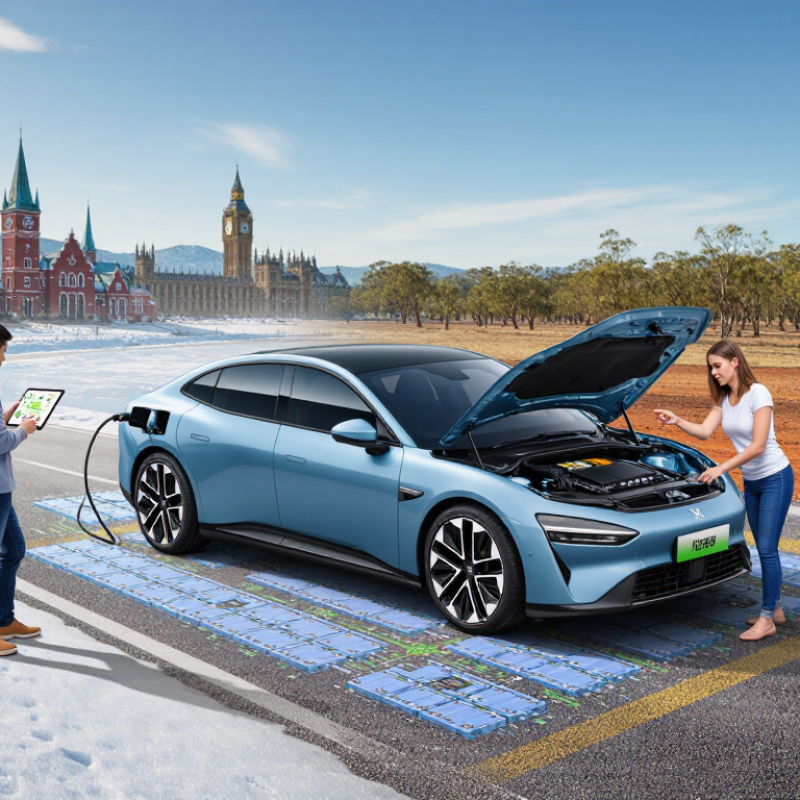
Electric vehicles reached nearly 18% of global car sales in 2023, according to the IEA’s Global EV Outlook 2024. That headline hides major regional differences. Electric cars represented about 35% of sales in China, 25% in Europe, and 10% in the United States. Define local fit before comparing driving range. Check charging access, connector standards, road quality, parking rules, and electricity prices. A vehicle perfect for city commuting may feel inconvenient in a remote area.
Study the local climate. Cold temperatures can reduce usable range and increase cabin-heating demand. Hot weather can also affect battery performance and charging speed. Ask for independent battery-warranty terms, service coverage, and replacement procedures. Examine ground clearance if roads flood or remain uneven. Confirm whether public chargers accept local payment methods. Small details matter. They often decide daily convenience.
Compare total ownership cost, not only the purchase price. The IEA reports that home charging is usually cheaper than public fast charging, where available. The ICCT’s lifecycle studies also show that electric cars generally produce lower lifetime greenhouse-gas emissions than combustion vehicles, although results vary with the electricity mix. Check local taxes, incentives, insurance, and resale conditions. I would not trust a single range figure. Test the car on a familiar route, with passengers and climate control running. Real life is less tidy.
Global electric car buyers should compare the whole ownership bill, not only the showroom price. Battery packs reached about $139 per kWh in 2023, according to BloombergNEF. That decline can support more affordable electric vehicles, but it does not guarantee lower costs in every country.
Check battery size, usable capacity, warranty length, and replacement terms. A larger pack may increase range, yet it can also raise purchase and repair costs. Estimate home charging with your local electricity rate. Then add public charging, installation, parking, insurance, registration, and import taxes. These details often change the result. Fast charging is convenient, but frequent use may cost more than overnight charging.
Compare energy costs with your current car using realistic annual mileage. Include tire wear and scheduled servicing. Electric cars often need fewer mechanical services, but repairs can require trained technicians and specialized equipment. Verify local service access before buying. Ask how battery health is measured, not just how long coverage lasts. Check resale values carefully, because regional demand can shift quickly. Exchange rates can also make a good estimate look weak.
BNEF’s figure is an industry average, not a personal invoice. Battery chemistry, labor, shipping, and local taxes still matter. My own comparison would include a small emergency budget. Estimates are never perfect. A spreadsheet may miss winter range loss, apartment charging limits, or a sudden tariff change. Test the charging routine for one week if possible. Real habits reveal costs that brochures usually hide.
Global average lithium-ion battery pack prices declined from approximately $1,160 per kWh in 2010 to $139 per kWh in 2023. The temporary increase in 2022 reflected higher raw-material and component costs.
Source: BloombergNEF battery price survey. Values are global average battery pack prices in nominal USD per kWh.
Range figures look precise, but they are laboratory estimates. Real driving can be very different. Cold mornings, steep roads, heavy loads, and highway speeds may reduce range sharply. During a test drive, check the battery percentage before and after a familiar route. Compare the displayed distance with actual kilometres travelled. A short urban drive is not enough. Try hills and faster roads if possible.
Battery health deserves equal attention. Ask for a recent diagnostic report showing usable capacity, charging history, and recorded faults. An independent inspection can reveal problems hidden by a clean dashboard. Check the warranty carefully, especially the 8-year or 160,000-kilometre limit. Confirm which date starts the coverage period. It may begin with the vehicle’s first registration, not your purchase date. Also verify whether the warranty follows the vehicle across borders.
Read the battery-capacity guarantee word by word. Some policies cover repairs only when capacity falls below a stated threshold. Others exclude damage from flooding, improper charging, or unauthorised repairs. Requirements may include approved service records or specific charging practices. Ask for these conditions in writing. Do not rely on a salesperson’s verbal promise. I would also check local repair access before buying. A generous warranty is less useful when the nearest qualified workshop is several hundred kilometres away. My own checklist would include photos of the dashboard, a written battery report, and a second opinion. It takes time, but uncertainty is expensive.
7 Tips for Global Electric Car Buyers
The International Energy Agency reported over four million public chargers worldwide in 2023. That number sounds reassuring, but availability varies sharply by country, city, and highway. Before renting or buying an electric car, inspect the route on a current charging map. Check the charger’s location, operating hours, connector type, and payment method. A charger beside a quiet industrial road may not suit a late-night arrival.
Tip 1: Plan two charging options for each long stop. Tip 2: Keep a charging buffer of at least 15 percent. Tip 3: Confirm whether local chargers accept foreign cards or require an app. Tip 4: Ask about cable compatibility before collecting the vehicle. Small details matter. A plug can fit physically but still charge slowly or fail completely. Public charging networks also report occasional outages, so screenshots and offline directions are useful.
Tip 5: Compare charging speed, not only battery size. A larger battery may save stops but take longer to refill. Tip 6: Study local driving conditions, including cold weather, steep roads, and heavy traffic. These can reduce real-world range. Tip 7: Locate a backup charger near your hotel or accommodation. I would not rely on a single station, even in a well-covered region. The four-million figure is valuable context, not a guarantee of convenience. Check the latest local information before every major journey.
| Tip | Data Dimension | Verified 2023 Data | What Global Buyers Should Check | Planning Action |
|---|---|---|---|---|
| 1 | Global public charging availability | More than 4 million public charging points were available worldwide in 2023. | High global totals do not guarantee convenient access in every city, rural area, or travel corridor. | Map charging locations along your regular routes before purchasing an electric car. |
| 2 | Charging-network growth | The global stock of public charging points grew by more than 40% in 2023. | Infrastructure is expanding quickly, but local coverage can change significantly from one market to another. | Check current local availability and expected infrastructure growth rather than relying only on global figures. |
| 3 | Regional concentration | China had more than 2.7 million public charging points in 2023, representing the majority of the global total. | Charging convenience depends strongly on region; a vehicle suitable for one market may be less practical in another. | Use regional charging-point density and route coverage as key purchase criteria. |
| 4 | Public fast charging | The global number of public fast chargers increased by approximately 55% in 2023. | Fast charging can reduce journey time, but stations may be less evenly distributed than slower public chargers. | Confirm that your preferred travel corridors have compatible fast-charging locations and adequate spacing. |
| 5 | Charging power and journey time | Public chargers range from slower AC charging to high-power DC charging, so charging time varies substantially. | Maximum vehicle charging speed is useful only when the station and local electrical supply can provide comparable power. | Compare the vehicle's AC and DC charging limits with the power levels commonly available in your market. |
| 6 | Home-charging dependence | Public infrastructure is expanding, but home charging remains an important part of convenient electric-car ownership where private parking is available. | Drivers without a dedicated parking space may depend heavily on public or workplace charging. | Confirm parking access, electrical capacity, installation rules, and overnight charging options before buying. |
| 7 | Cross-border and regional compatibility | Charging availability, connector standards, payment methods, and roaming arrangements differ across markets. | International travel may require additional access methods even when public chargers are plentiful. | Verify connector compatibility, payment requirements, language support, and charging access in every country on your planned route. |
Source: International Energy Agency (IEA), Global EV Outlook 2024. Global totals and regional figures are rounded as reported by the IEA; local availability and charger status should be checked before travel.
Buying an electric car across borders requires more than comparing range and charging speed. Safety documentation should match the exact battery, software version, and market configuration. Ask for independent crash results, recall history, battery protection details, and emergency shutoff instructions. Do not rely on a translated sales page. Paperwork matters.
Before paying a deposit, check whether your country permits that vehicle’s import and registration. Confirm customs duties, certification fees, inspection requirements, charging standards, and warranty limitations with official authorities. Incentives may depend on income, vehicle origin, battery materials, or local assembly. An attractive rebate can disappear after a rule change. A low price can become expensive.
Data rights deserve the same attention as physical safety. Connected cars may collect location records, driving patterns, cabin audio, or charging information. Read the privacy notice before activating the vehicle’s online services. Check where data is stored, who receives it, how long it remains available, and whether deletion is possible. Ask whether remote diagnostics require continuous connectivity. Also test the charger, navigation system, language settings, and emergency support before delivery. These checks are easy to overlook. I still think buyers sometimes trust polished specifications too quickly, including me when comparing unfamiliar markets. Keep copies of every promise, invoice, certification, and official reply.
Check the battery percentage before and after a familiar route. Record the kilometres travelled. Use city streets, hills, and faster roads when possible. Cold weather, heavy luggage, and high speeds can reduce range. One short urban drive is not enough.
Ask for a recent diagnostic report. It should show usable capacity, charging history, and recorded faults. A clean dashboard proves very little. An independent inspection may reveal hidden problems. Keep a copy.
Check the duration and distance limit, such as eight years or 160,000 kilometres. Confirm the coverage start date. It may begin at first registration, not your purchase date. Ask whether coverage follows the vehicle across borders. Read capacity thresholds and exclusions carefully.
Some policies require approved service records or specific charging practices. Others exclude flooding, improper charging, or unauthorised repairs. Request every condition in writing. Verbal promises can become difficult to prove. I might trust a confident salesperson too quickly.
Ask where qualified repairs are available. The nearest workshop may be several hundred kilometres away. A generous warranty is less useful when travel is difficult. Check response times and inspection arrangements. Distance matters.
Request documents for the exact battery, software version, and market configuration. Check independent crash results and recall history. Review battery protection and emergency shutoff instructions. A translated sales page may omit important details. Paperwork matters.
Confirm permission with official authorities before paying a deposit. Check customs duties, certification fees, inspections, and charging standards. Ask about warranty limits in your country. Incentives may depend on income, vehicle origin, battery materials, or local assembly. A discount can disappear after a rule change.
It may record location, driving habits, cabin audio, and charging information. Read the privacy notice before activating online services. Check storage location, recipients, retention period, and deletion options. Ask whether remote diagnostics require continuous connectivity. I would not assume convenience means privacy.
Test the charger, navigation, language settings, and emergency support. Photograph the dashboard and battery percentage. Keep invoices, certifications, written promises, and official replies. A second opinion can expose gaps. Do not rush.
Buying an electric vehicle for use across borders requires more than comparing prices. Start by defining the right local fit: electric vehicles represented about 18% of global car sales in 2023, but driving habits, weather, roads, and repair access vary widely. Compare the total cost of ownership, including purchase price, charging, insurance, maintenance, taxes, and resale value. Battery costs reached approximately $139 per kWh in 2023, yet buyers should still verify battery condition, expected degradation, and warranty coverage, ideally including an eight-year or 160,000-kilometer guarantee.
Charging access is equally important. With more than four million public chargers worldwide in 2023, availability is growing, but connector standards, payment systems, and charging speeds differ by region. Before purchasing a Car Electric Car, confirm real-world range, safety certifications, local incentives, import requirements, service support, software compatibility, and how personal driving data is collected and used. A careful checklist can help ensure the vehicle remains practical, affordable, and reliable in its intended market.

Limaotong